Stitching the Copeland Vibe: A Designer’s Review
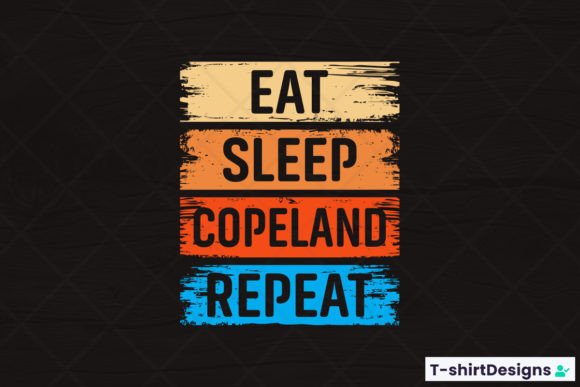
As someone who has spent countless hours hunched over an embroidery hoop, watching needles dance across fabric, I have developed a keen eye for what works and what fails in the machine embroidery world. We are not just pushing buttons; we are translating digital art into tactile texture. Recently, I pulled up the Eat Sleep Copeland Repeat design to evaluate its potential for a batch of custom orders. This is not just another generic quote; it carries a specific personality that demands careful handling to ensure the final product meets professional standards.
The first impression of this graphic is its bold, rhythmic simplicity. The phrase plays on the ubiquitous "Eat Sleep Repeat" motif but injects a localized or personalized twist with "Copeland." For embroidery designers, this structure is both a blessing and a challenge. The layout is linear, which suggests stability, but the success of the piece relies entirely on font choice, spacing, and stitch execution. When I visualized this on a canvas tote bag for a local boutique client, the mood felt casual yet intentional. It speaks to routine, community, and a bit of humor. However, translating that casual vibe into a durable handmade product requires technical precision.
Real-World Application: Beyond the Screen
Digital previews can be deceiving. A T-Shirt Designs mockup might look crisp on a white background, but real life involves texture, stretch, and wear. I decided to test the concept mentally against a few common project types before committing to thread. Imagine this design stitched onto a heavy-weight cotton sweatshirt. The bulk of the garment can support a denser stitch pattern, allowing the letters to pop without sinking into the fleece. Here, the Eat Sleep Copeland Repeat theme shines as a statement piece for school spirit, family reunions, or local pride merchandise.
Conversely, placing this on a baby onesie requires a different approach. The fabric is delicate, and the wearer is active. If the design includes intricate serifs or tight corners, they may pucker or irritate sensitive skin. In this scenario, I would recommend simplifying the fill or opting for a lighter running stitch outline rather than a heavy fill stitch. The goal is to maintain readability while ensuring comfort. For custom apparel like aprons or kitchen towels, the design fits naturally into the domestic aesthetic. It becomes part of the home’s narrative, turning a functional item into a personalized gift that feels thoughtful rather than mass-produced.
Navigating Technical Constraints
One of the most critical aspects of reviewing any Graphics file for embroidery is understanding its limitations. The phrase "Eat Sleep Copeland Repeat" is relatively long. If you are working with a small hoop size, such as a 4x4 inch frame, you will face significant scaling issues. Compressing the text to fit reduces legibility and increases the risk of thread breaks due to high stitch density in a confined area. I always advise checking the dimensions of your specific embroidery file before purchasing or downloading. If the design is intended for a cap, the curved surface adds another layer of complexity. The center of the design must align perfectly with the cap’s seam, and the text should not wrap too far around the curve, or it will distort visually.
Fabric texture also plays a pivotal role. On a smooth polyester blend, satin stitches will gleam and look sharp. On a textured linen or terry cloth, those same stitches might get lost in the weave. For rougher fabrics, consider using an applique design technique where the text is cut from contrasting fabric and stitched down. This reduces stitch count, saves time, and creates a bold, retro look that suits the playful nature of the quote. Always use the appropriate stabilizer; a cut-away stabilizer is often best for garments that will undergo frequent washing, ensuring the design does not pull or warp over time.
Commercial Viability and Brand Consistency
For Etsy sellers and craft business owners, the appeal of Eat Sleep Copeland Repeat lies in its niche specificity. Generic quotes are saturated markets. By targeting a specific name or location, you create immediate value for a defined customer base. This design can serve as a cornerstone for a small shop product line focused on local identity. However, professionalism is key. Customers judge the quality of your brand by the clarity of your stitching. Sloppy corners or loose threads undermine the perceived value of the item.
When creating printable mockups or digital embroidery file previews for your online store, ensure you showcase the design on various backgrounds. Show it on dark navy, heather grey, and bright white. This helps buyers visualize the contrast and understand how thread colors interact with the fabric. A well-executed sample builds trust. It shows that you have tested the design assets and are confident in the finished product. This attention to detail converts browsers into buyers and encourages repeat business.
Practical Notes for the Embroiderer
Before you load this design into your machine for a client order, take these practical steps. First, always stitch out a test on scrap fabric identical to your final material. This allows you to check tension, thread breakage, and overall appearance without risking expensive garment stock. Pay close attention to the letter "C" in Copeland and the "R" in Repeat; curved letters often require careful digitizing to avoid gaps or excessive buildup.
Second, verify the licensing terms. Just because a design is available as a digital embroidery file does not automatically grant commercial rights. Ensure you have the proper license to sell items made with Eat Sleep Copeland Repeat. If you are unsure, contact the designer or platform directly. Protecting your business from legal issues is as important as protecting your thread from breaking.
Finally, consider the end user. Is this for a holiday embroidery gift? A team uniform? A babys embroidery keepsake? Context dictates color choices. Bright, contrasting threads work well for playful items, while monochromatic or tonal threads offer sophistication for adult apparel. By treating each embroidery project with this level of scrutiny, you elevate your work from simple decoration to professional craft. The Eat Sleep Copeland Repeat design is a versatile tool in your arsenal, provided it is handled with the respect and technical care it deserves.