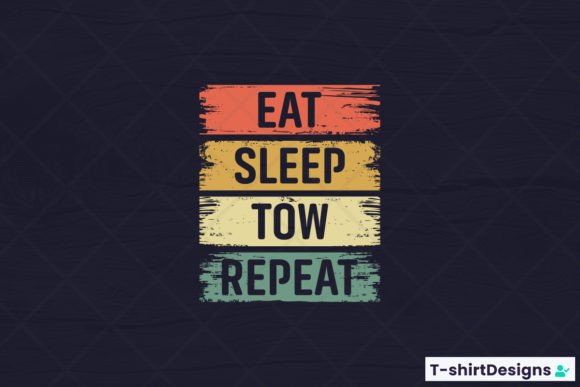
Eat Sleep TOW Repeat: A Designer’s Stitching Review
As an embroidery designer who has spent years digitizing files and testing them on everything from stiff canvas to flimsy jersey, I have developed a keen eye for what works in the hoop. We are not just looking at pretty pictures; we are looking at structural integrity, stitch flow, and marketability. When I first loaded the Eat Sleep TOW Repeat design into my software, I was immediately struck by its potential for the outdoor and automotive enthusiast niche. This is not just another generic quote; it taps into a specific lifestyle culture that values recovery gear and off-road adventures.
The visual personality of this graphic is bold and straightforward. In the world of T-Shirt Designs, clarity is king. If a customer cannot read the message from three feet away, the design has failed. This layout respects that rule. The typography appears robust, suggesting that it will hold up well under the tension of machine stitching. For those of us running small shops or selling on Etsy, finding Graphics that translate well from screen to thread is half the battle. This design feels like it belongs on durable goods rather than delicate fashion pieces.
Real-World Application: The Tow Strap Test
To truly evaluate a design, you must imagine it in a real-life scenario. I recently worked on a custom order for a client who runs a boutique shop specializing in overlanding gear. She wanted a signature item that would appeal to jeep owners and off-roaders. My mind went straight to heavy-duty tote bags and thick cotton aprons. I envisioned placing Eat Sleep TOW Repeat on a rugged canvas tote bag used for carrying recovery gear.
In this context, the design shines. The humor is immediate, and the theme aligns perfectly with the product’s function. When stitching onto textured fabrics like canvas or denim, you need a design that does not get lost in the weave. The bold lines of this quote suggest it would maintain its legibility even on coarse materials. It creates a mood of camaraderie and shared passion among hobbyists. For a handmade product intended as a personalized gift for a truck owner or off-road enthusiast, this design hits the right emotional note without being overly sentimental.
Performance Across Different Garments
While the tote bag idea was strong, I also considered how this machine embroidery design would perform on apparel. Sweatshirt embroidery is a massive market during the cooler months. Placing this design on the left chest of a heavyweight hoodie offers a subtle yet recognizable badge of identity for the wearer. However, one must be cautious with placement. If the text is too long, it might wrap awkwardly around the curve of the chest. I recommend testing the scale carefully to ensure the words remain on a single line or break naturally if stacked.
For baby embroidery or nursery decor, this design is likely too niche and rugged. It fits better in the realm of adult custom apparel. However, do not rule out embroidered patches. A satin stitch border around this text could create a fantastic iron-on or sew-on patch for hats and jackets. Patches allow for higher stitch density without worrying about fabric puckering, making them an ideal medium for detailed Graphics like this.
Technical Considerations for Stitchers
Before you load this digital embroidery file into your machine, there are practical steps to take. First, always test the design on scrap fabric that matches your final project material. If you are stitching on a stretchy fabric like a t-shirt, the stability of the text becomes critical. You must use a proper stabilizer—likely a cut-away for garments that will be washed frequently—to prevent the letters from distorting over time.
Pay close attention to stitch density. While I do not have the exact technical specs for this specific file in front of me, designs with bold lettering often rely on fill stitches. If the density is too high, it can cause perforation in thinner fabrics. If it is too low, the backing fabric might show through. Check the preview in your software. Look for any tiny details or sharp corners that might cause thread breaks. A good embroidery file should have smooth transitions between letters.
Thread color contrast is another vital element. On a dark navy sweatshirt, using bright white or neon orange thread will make the Eat Sleep TOW Repeat text pop. On a light heather gray shirt, a deep charcoal or black thread provides necessary definition. Avoid low-contrast combinations, such as beige thread on a cream tote bag, as this will render the design invisible from a distance.
Navigating Fabric and Hoop Constraints
Where should you use this design carefully? Small hoop sizes can be tricky if the text is lengthy. Ensure the design fits comfortably within your 4x4 or 5x7 hoop with enough margin for clamping. Curved surfaces, like the front of a cap, require special attention. The text must be arched or sized appropriately to follow the contour of the hat without distortion. If the design is strictly linear, it may look warped on a curved cap panel.
Additionally, be mindful of dense stitch areas. If the letters are thick, they can create a stiff patch on soft fabrics. This might be uncomfortable on items worn directly against the skin, such as baby clothes or lightweight tees. For these applications, consider using an applique design technique where the text is cut from fabric and stitched down, reducing the amount of thread buildup while maintaining visual impact.
Commercial Value and Brand Consistency
For Etsy sellers and craft business owners, the profitability of a design lies in its versatility and appeal. Eat Sleep TOW Repeat targets a specific demographic, which can be advantageous for niche marketing. It builds brand consistency for shops focused on outdoor lifestyles, automotive hobbies, or masculine-themed gifts. Customers trust products that look professional and well-executed. A clean, crisp stitch-out enhances perceived value.
When creating printable mockups or digital product previews, show the design on relevant items. Do not just place it on a plain white background. Show it on a muddy jeep seat cover, a rugged backpack, or a workshop apron. This helps buyers visualize the finished product in their own lives. It increases buyer engagement and reduces hesitation.
Finally, always confirm licensing before selling finished items or digital products. Ensure that the design assets you purchase allow for commercial use. Nothing damages a small shop’s reputation faster than copyright issues. Once you have cleared the legal hurdles and tested the technical aspects, this design offers a solid foundation for a successful embroidery project. It is practical, humorous, and technically sound, provided you respect the limitations of your fabric and machine.