Reviewing the Fueled by Energy Drinks Keyc Design
As a designer who has spent countless hours staring at digitizing software and even more time pulling out stitches from ruined fabric, I approach every new machine embroidery design with a healthy dose of skepticism. We have all seen those trendy graphics that look incredible on a screen but turn into a tangled mess of thread once the needle hits the hoop. Recently, I came across Fueled by Energy Drinks and Anxiety Keyc, a piece of digital art categorized under Crafts and Graphics. It caught my eye not just for its humorous, relatable message, but for the challenge it presents to the embroiderer. Here is my practical assessment of how this design holds up in real-world production.
First Impressions and Visual Personality
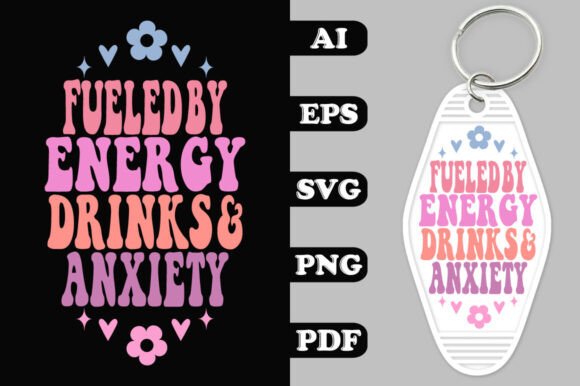
The immediate mood of Fueled by Energy Drinks and Anxiety Keyc is chaotic yet charming. It taps into a very specific modern aesthetic that resonates with millennials and Gen Z consumers who appreciate self-deprecating humor. From a layout perspective, the design balances text with illustrative elements, likely featuring bold typography paired with energetic iconography. For an embroidery project, this combination is tricky. Text requires crisp edges, while energetic illustrations often demand fluid lines. The visual personality suggests a design that is meant to be noticed, making it ideal for statement pieces rather than subtle accents.
When I first loaded the preview, I looked for potential red flags: overly dense fill areas, tiny details that might get lost in the fabric weave, or complex curves that could cause puckering. The theme suggests a high-energy vibe, which often translates to busy stitch patterns. However, if digitized correctly, this can result in a textured, tactile finish that adds significant value to a handmade product.
Real-World Application Scenarios
To truly evaluate Fueled by Energy Drinks and Anxiety Keyc, I imagined placing it on various substrates. This is not a design for delicate silk; it needs body. My primary test case was a heavy-weight cotton tote bag. Tote bags are a staple for Etsy sellers and craft fair vendors. The durability of the canvas supports the stitch density required for bold lettering, and the flat surface ensures the design remains clear without distortion. Imagine a customer grabbing this bag for their daily commute; the relatable message creates an instant connection, turning a simple accessory into a conversation starter.
Another strong candidate is sweatshirt embroidery. A crewneck sweatshirt provides a stable, thick fabric that handles fill stitch areas well. Placing this design on the left chest or as a larger back print could work, provided the scale is adjusted appropriately. The humor fits perfectly with casual, comfortable apparel. For custom apparel businesses, offering this as a personalized option where the buyer can add their name below the main graphic could increase perceived value. It transforms a generic joke into a personalized gift that feels bespoke.
I also considered its use on an embroidered patch. Patches are versatile design assets that can be applied to jackets, hats, or bags later. Since patches are usually stitched on a stiff stabilizer and then cut away, they allow for higher stitch density without worrying about fabric puckering. This makes them an excellent medium for intricate Graphics like this one, ensuring every detail of the "anxiety" and "energy" elements remains sharp.
Technical Challenges and Fabric Considerations
While the concept is strong, the execution requires careful planning. One major concern with any text-heavy or detailed illustration is the stitch density. If the design relies heavily on satin stitches for small letters, there is a risk of thread breakage or the fabric pulling. I recommend checking the digitizing to ensure that running stitches are used for fine outlines and that fill areas are not too compact.
Fabric choice is critical. Avoid stretchy knits unless you are using a cut-away stabilizer and have experience with hooping jersey fabrics. The tension from the hoop combined with dense stitching can cause permanent distortion on thin materials. Similarly, textured fabrics like terry cloth or heavy fleece might swallow up small details. For these surfaces, consider simplifying the design or increasing the size to maintain clarity. Dark fabrics present another challenge; if the design uses light thread colors for contrast, ensure the underlay is sufficient to prevent the background fabric from showing through the top stitches.
Curved surfaces, such as caps, require extra caution. The center front panel of a cap is narrow. If Fueled by Energy Drinks and Anxiety Keyc is wide, it may wrap around the sides, causing visibility issues and stitching problems. Always measure the available hoop area before committing to a project. For caps, a simplified version or a smaller scale might be necessary to fit the constrained space.
Enhancing Product Value and Brand Consistency
From a business perspective, using trending, relatable designs like this can boost buyer engagement. It shows that your craft business is current and understands its audience. However, consistency is key. If your brand is known for elegant, minimalist floral embroidery, this chaotic, humorous design might feel out of place. But if your shop focuses on pop culture, mental health awareness, or quirky gifts, it fits perfectly. It builds trust because it feels authentic to the niche.
The "giftability" factor is high. People love giving gifts that reflect the recipient’s personality. A holiday embroidery project featuring this design on a kitchen towel or apron could be a hit for a friend who runs on caffeine and stress. It moves beyond mere decoration to become a piece of identity. For small shop products, this differentiation is crucial in a saturated market.
Practical Designer Notes for Execution
Before you sell your first unit, follow these steps to ensure quality:
- Test on scrap fabric: Always stitch out a sample on the exact fabric type you plan to use. Check for puckering, thread breaks, and registration issues.
- Check thread color contrast: Use a color chart to select threads that pop against your fabric. High contrast improves readability, especially for the text elements.
- Review stitch density: If the design feels stiff after stitching, the density might be too high. Adjust settings if your software allows, or choose a lighter fabric weight.
- Confirm hoop size: Ensure the design fits within your machine’s maximum hoop size with room for proper clamping.
- Inspect small details: Zoom in on the digital file. Are there tiny isolated stitches that might pull out? These may need manual editing or removal.
- Use proper stabilizer: Match the stabilizer to the fabric. Cut-away for knits, tear-away for wovens, and wash-away for delicate or sheer fabrics.
- Verify licensing: Before selling finished items or digital products, confirm the license terms for Fueled by Energy Drinks and Anxiety Keyc. Ensure you have commercial rights if you plan to monetize the finished product.
In conclusion, Fueled by Energy Drinks and Anxiety Keyc is a promising asset for the right project. It offers a blend of humor and style that appeals to a broad audience. By respecting the technical limitations of embroidery and choosing the right substrates, you can transform this digital file into a high-quality, best-selling item. Whether you are creating a tote bag design for a local market or a custom patch for an online store, this design has the potential to stand out, provided it is executed with precision and care.