Funny Cat Design: A Real-World Embroidery Review
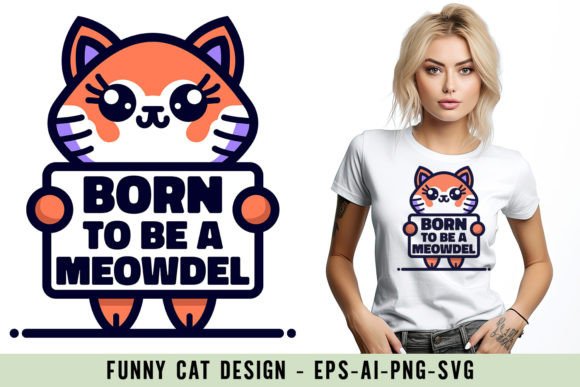
As a designer who has spent years translating digital files into tangible thread on fabric, I approach every new asset with a mix of excitement and skepticism. The market is flooded with T-Shirt Designs that look crisp on a screen but fall apart under the needle. When I first opened the file for Funny Cat Design, my goal was simple: determine if this playful illustration could survive the transition from a vector graphic to a high-quality, stitched product. The concept is undeniably charming—a cat holding a sign that reads "Born to be a meowdel"—but does it hold up when you consider stitch density, fabric texture, and the practical realities of running a craft business?
First Impressions: Visual Weight and Personality
The initial visual impact of Funny Cat Design is strong. It strikes a perfect balance between whimsical character and clear communication. For an embroidery project, clarity is king. Many designs fail because they rely on gradients or overly intricate details that get lost in the fill stitch. This design avoids those pitfalls. The cat's pose is dynamic yet stable, and the sign acts as a focal point that anchors the composition.
From a design perspective, the layout feels balanced for a variety of applications. Whether you are planning a sweatshirt embroidery project or a smaller embroidered patch, the elements are distinct enough to maintain their identity even when scaled down slightly. The typography on the sign is bold, which is crucial. In machine embroidery, thin lettering often turns into a mess of tangled threads, but the font choice here suggests it will stitch cleanly. This kind of visual confidence is what separates a generic digital embroidery file from one that adds genuine value to your shop.
Testing the Waters: A Real-World Scenario
To truly evaluate this asset, I imagined a specific use case: creating a line of personalized tote bags for a local boutique. Tote bags are a staple for Etsy sellers and small shop owners, but they present unique challenges due to the woven texture of canvas. I visualized placing Funny Cat Design on a natural-colored cotton tote. The contrast would be excellent, allowing the thread colors to pop without needing excessive underlay stitches.
In this scenario, the design transforms a basic utility item into a conversation starter. Customers love items that express personality, and a "meowdel" pun fits perfectly into the current trend of cute, relatable humor. If I were selling these as a handmade product, the design elevates the perceived value immediately. It moves the item from a commodity to a curated gift. However, I also considered how this would look on a dark navy sweatshirt. Here, the challenge shifts to ensuring the white text on the sign remains legible against the dark background. The design's clean lines suggest it would handle a color change well, provided the stitch density is managed correctly to prevent show-through.
Navigating Technical Challenges and Fabric Choices
While the design is robust, no machine embroidery design is foolproof. There are specific situations where you must exercise caution. First, consider the hoop size. While the overall shape is manageable, the text on the sign requires precision. If you attempt to shrink this design too much for a tiny baby hat or a small keychain, the letters may lose definition. Always test the design on scrap fabric at your intended size before committing to expensive materials.
Fabric texture is another critical factor. On smooth fabrics like jersey or twill, Funny Cat Design should stitch beautifully. However, on highly textured surfaces like heavy fleece or boucle, the fine details of the cat's whiskers or the edges of the sign might get lost in the fabric weave. In these cases, increasing the fill stitch density or using a heavier stabilizer becomes non-negotiable. Similarly, if you are working with stretchy fabrics common in custom apparel, the tension of the stitching can cause puckering. A cutaway stabilizer is likely necessary here to support the weight of the design.
One area to watch closely is the interaction between the cat and the sign. Where the paws grip the sign, there is potential for overlapping stitch areas. If the running stitch outlining the paws intersects with the satin stitch border of the sign, you risk thread bunching. A quick preview in your digitizing software or a test run on a spare piece of fabric will reveal if any manual adjustments to the pull compensation are needed.
Business Viability for Craft Entrepreneurs
For the Etsy seller or the owner of a handmade shop, time is money. A design that requires constant troubleshooting slows down production. Funny Cat Design appears to be a low-maintenance asset, which is a significant advantage. Its straightforward geometry means fewer jump stitches and less thread trimming, speeding up the workflow. This efficiency directly impacts your bottom line, allowing you to produce more holiday embroidery gifts or boutique branding items in less time.
Furthermore, the versatility of the design makes it an excellent addition to your design assets library. It works equally well as a standalone statement on a pillow cover or as part of a larger collection of animal-themed Graphics. You could create a matching set with other pets, expanding your product line without needing to source entirely new art. The availability of AI, EPS, SVG, and PNG formats ensures you have the flexibility to use it for both physical embroidery and printable mockup previews, which are essential for showcasing your work online.
Final Verdict and Practical Tips
Before integrating Funny Cat Design into your commercial projects, remember to verify the licensing terms. Ensure you have the right to sell finished goods if you plan to list them on your website or at a craft fair. Once cleared, here are my final recommendations for success:
- Test on Scrap Fabric: Never skip the test run. Check how the text on the sign holds up and ensure the cat's features remain sharp.
- Check Color Contrast: Use a printable mockup to visualize how different thread colors look against light and dark fabrics.
- Stabilize Properly: Regardless of the fabric, use a quality stabilizer to prevent shifting, especially around the detailed sign area.
- Inspect Small Details: Zoom in on the finished sample to ensure no loose threads or skipped stitches mar the presentation.
In conclusion, Funny Cat Design is a solid, reliable choice for designers looking to add a touch of humor and charm to their portfolio. It bridges the gap between a cute internet meme and a professional finished product. With its clear lines, engaging theme, and adaptability across various embroidery projects, it is ready to be stitched onto everything from baby embroidery items to adult apron accessories. Just respect the technical limits of your machine and fabric, and this design will serve your business well.