Reviewing I Love You to the Moon and Back for Stitching
As a designer who has spent countless hours digitizing and stitching out files for clients, I have learned that not every pretty graphic translates well into thread. When I first encountered I Love You to the Moon and Back, my initial reaction was one of cautious optimism. The phrase is a classic sentiment, widely recognized and deeply emotional, making it a staple for Valentine’s Day, anniversaries, and nursery decor. However, knowing that this product is marketed primarily as a bundle of sublimation designs in formats like SVG, PNG, EPS, PDF, and JPG, I had to approach it with a critical eye toward its potential as an embroidery asset.
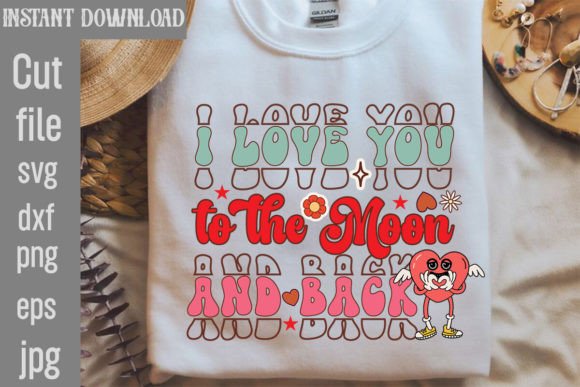
The visual personality of the design is soft and romantic. It relies heavily on heart motifs and whimsical typography, which creates an immediate sense of warmth. For those of us in the craft business, specifically Etsy sellers and small shop owners, this mood is crucial. It sells the emotion before the customer even touches the fabric. But does it hold up under the needle? That is the question I aimed to answer by mentally walking through a real-world production scenario.
From Digital Asset to Threaded Reality
Let’s consider a common project: a custom embroidered tote bag or a cozy sweatshirt. These are high-demand items for handmade product lines. When I look at I Love You to the Moon and Back, I imagine it centered on the chest of a heather grey crewneck or printed large on a canvas tote. The layout appears balanced, with the text weaving around celestial elements. In a digital mockup, this looks flawless. In embroidery, however, we must consider stitch density and fabric texture.
If you are using this as a reference to create a machine embroidery design, or if you are adapting the vector paths from the included SVG files, pay close attention to the lettering. Small, intricate fonts can become illegible if the stitch count is too low or if the thread color lacks contrast against the fabric. For a sweatshirt embroidery project, a satin stitch might work well for the hearts, providing a shiny, premium finish that catches the light. However, for the text, a clean running stitch or a narrow fill stitch often reads better on textured fabrics like fleece or terry cloth.
For baby embroidery projects, such as onesies or burp cloths, the scale becomes critical. The "moon" element in the design needs to be simplified. Complex curves in a small hoop size can lead to puckering if the stabilizer is not chosen correctly. I always recommend testing the design on scrap fabric first, especially when working with stretchy materials. A heavy cut-away stabilizer is usually my go-to for knit fabrics to ensure the finished product remains flat and professional.
Navigating Fabric and Hoop Constraints
One of the biggest challenges with romantic, text-heavy graphics is their performance on difficult surfaces. If you plan to use I Love You to the Moon and Back for an embroidered patch or a cap, you need to be strategic. Caps have curved surfaces that distort straight lines. The arch of the moon in this design could actually work in your favor here, mimicking the curve of the hat brim. However, you must check the width of the design against your hoop size. Most standard caps use a 70mm x 45mm hoop, so scaling down the SVG file while maintaining legibility is key.
Dark fabrics present another hurdle. If you are stitching this onto a navy blue hoodie or a black tote bag design, thread colors matter immensely. Light pastels or metallic threads can provide the necessary pop, but they may require higher stitch density to cover the background fabric completely. Always inspect small details in black and white mockups before committing to thread. This helps you see if the contrast is sufficient without the distraction of color. If the hearts blend into the text, the design loses its impact.
Additionally, consider the washability of the final item. Kitchen towels and aprons undergo frequent laundering. Dense stitch areas can become stiff or cause the fabric to pucker over time. For these items, I suggest reducing the stitch density where possible and using high-quality rayon or polyester threads that resist fading. This ensures your commercial embroidery projects maintain their value and professionalism after multiple washes.
Commercial Viability and Brand Consistency
For digital product sellers and creative entrepreneurs, the versatility of I Love You to the Moon and Back is a major selling point. While the primary formats provided are for sublimation and print, the inclusion of SVG and EPS files allows for significant adaptation. You can use these vectors to trace new embroidery files, ensuring you have full control over stitch types and underlay. This level of customization is essential for brand consistency. If your boutique branding relies on minimalist aesthetics, you might simplify the heart details. If your style is bold and colorful, you can enhance the fill stitches.
Customer trust is built on quality. A sloppy embroidery job with loose threads or misaligned elements can damage your reputation as an Etsy seller. By taking the time to digitize or adapt this design properly, you elevate the perceived value of the handmade product. Buyers are willing to pay more for items that look meticulously crafted. Whether it is a holiday embroidery gift for a partner or a personalized product for a new parent, the clarity of the stitching reflects the care put into the creation.
It is also important to address licensing. Since this product is described as a Valentines Bundle with various digital formats, you must confirm whether the license allows for commercial use of derived embroidery files. Many designers allow you to sell physical finished products but restrict the resale of the digital embroidery file itself. Always read the terms carefully to protect your craft business from legal issues.
Practical Notes for the Embroidery Designer
Before you load this design into your machine or begin tracing the vectors, keep these practical tips in mind:
- Test on Scrap Fabric: Never stitch a new design directly on your final garment. Use similar weight and texture scraps to check for puckering or thread breaks.
- Check Thread Contrast: Ensure your thread colors stand out against the fabric texture. High contrast improves readability, especially for smaller text.
- Review Stitch Density: If adapting from SVG, avoid overly dense fills on thin fabrics to prevent stiffness and distortion.
- Confirm Hoop Size: Measure the design dimensions against your available hoops. Scale down if necessary, but ensure tiny details remain visible.
- Use Proper Stabilizer: Match the stabilizer to the fabric. Cut-away for knits, tear-away for wovens, and water-soluble for delicate or pile fabrics.
- Verify Licensing: Double-check the usage rights for commercial sales of finished items versus digital redistribution.
In conclusion, I Love You to the Moon and Back offers a strong foundation for emotional, gift-oriented products. Its success in embroidery depends entirely on how well you adapt its visual elements to the physical constraints of thread and fabric. With careful planning, proper stabilization, and attention to detail, this design can become a standout piece in your collection of T-Shirt Designs and Graphics, appealing to customers looking for heartfelt, high-quality handmade goods.