Funny Hot Chili Pepper 1 Embroidery Review
As a designer who has spent years translating digital files into tangible thread on fabric, I approach every new asset with a mix of excitement and skepticism. The gap between a crisp digital product and a successful finished product is often where projects fail or shine. Today, I am putting Funny Hot Chili Pepper 1 through that exact lens. This isn't just about whether the clip art looks cute on a screen; it is about how it translates when punched by a needle, how it holds up on textured fabrics, and whether it will actually sell for your craft business.
The First Impression: Personality in Vector Form
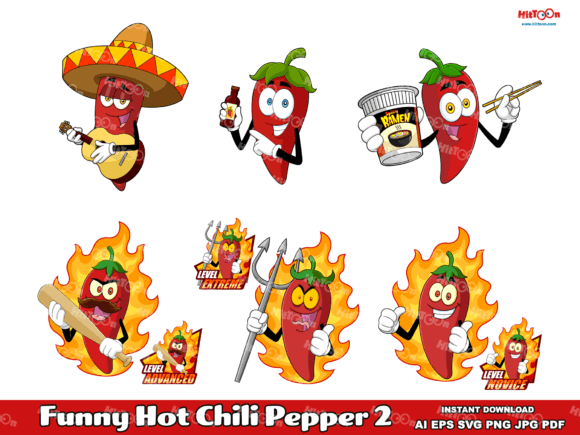
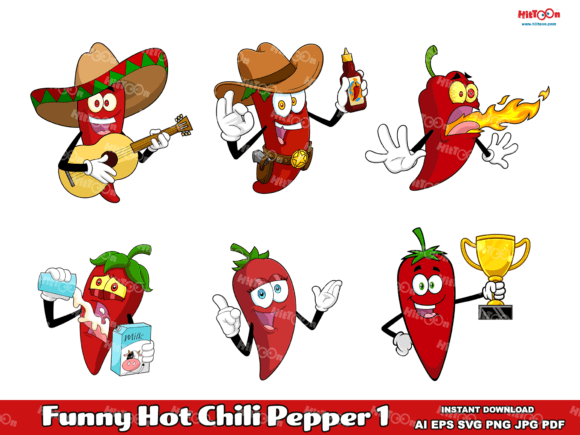
When you first open the Instant Download package for Funny Hot Chili Pepper 1, the mood is immediately established. We are looking at a vector hand-drawn collection set isolated on a transparent background. In the world of Illustrations and Graphics, this style is distinctively playful. It moves away from photorealism into something more whimsical and character-driven. For an embroidery project, this is a double-edged sword. On one hand, the "hand-drawn" aesthetic forgives minor stitching imperfections better than rigid geometric lines. On the other, the organic curves require careful digitization to ensure they don't look jagged once stitched.
The visual personality here screams "spicy fun." It feels less like a botanical study and more like a mascot for a kitchen brand or a quirky holiday gift. If you are an Etsy seller looking for design assets that pop in a crowded marketplace, this kind of expressive character work often captures attention faster than generic floral motifs. The layout suggests movement, which is crucial for keeping the eye engaged on a small embroidered patch or a tote bag design.
Real-World Application: From File to Fabric
Let's talk about a real scenario. Imagine you are preparing a custom line of aprons for a local boutique or perhaps creating personalized gifts for a cooking-themed bridal shower. You need a design that says "I love spicy food" without being aggressive. This is where Funny Hot Chili Pepper 1 fits naturally. Picture the design centered on a heavy-duty canvas tote bag or placed on the chest of a cozy sweatshirt. The bold outlines inherent in the hand-drawn style would likely translate well into a satin stitch border, giving the pepper definition against the fabric grain.
For custom apparel, particularly sweatshirt embroidery, the scale of this design matters. Because it is part of a set of six variations, you have flexibility. You could use a single large pepper as a statement piece on the back of a hoodie, or arrange smaller versions in a cluster on a cap. The "funny" aspect implies exaggerated features—maybe big eyes or a tongue sticking out. These details need to be robust enough to survive the washing machine. If the digitizer relies too heavily on tiny running stitches for facial expressions, those details might blur over time. However, if the file uses solid fill stitch areas for the main body, the durability increases significantly.
I also see strong potential for baby embroidery items, provided the colors are adjusted to be softer. A chili pepper can be a great motif for "spicy little one" themed nursery decor or tea towels. The key here is the stitch density. On delicate baby clothes, high density can make the fabric stiff and uncomfortable. You would need to test the embroidery file to ensure the backing stabilizer doesn't overpower the softness of the garment.
Navigating Technical Challenges
While the concept is strong, practical application requires caution. There are specific situations where Funny Hot Chili Pepper 1 needs careful handling. First, consider the hoop size. If you are working within a small 4x4 inch hoop, complex hand-drawn details can get lost. You must inspect the smallest elements of the design before committing to a tiny hoop size. Tiny lettering or intricate corner details often require manual editing in your software to prevent thread breakage or puckering.
Fabric texture is another critical factor. On smooth cotton or twill, this design will likely look fantastic. However, on highly textured fabrics like fleece or thick denim, the fine lines of the hand-drawn style might not register clearly. The thread may sink into the pile of the fabric, obscuring the "funny" expression. In these cases, using a tear-away stabilizer is non-negotiable to lift the surface and allow the needle to penetrate cleanly.
Furthermore, think about color contrast. A red chili pepper on a dark maroon shirt will vanish. You need to plan your thread colors carefully. Using a white underlay or a bright outline can help the design stand out on dark backgrounds. Also, avoid placing this design on stretchy knits without proper stabilization; the tension of the stitches combined with the stretch of the fabric can cause the image to warp, distorting the cheerful face of the pepper.
Strategic Value for Your Craft Business
For the small shop owner or creative entrepreneur, the value of Funny Hot Chili Pepper 1 extends beyond the stitch itself. It impacts your brand consistency and customer trust. A well-executed machine embroidery design signals quality. When a customer buys a handmade product, they expect the design to be crisp and professional. If the stitching is messy or the design looks pixelated, it reflects poorly on your entire brand.
This design offers excellent versatility for commercial embroidery projects. Whether you are creating holiday embroidery gifts, personalized products for events, or inventory for your online store, having a cohesive set of graphics allows you to build a collection. You can create matching sets of kitchen towels, coasters, and bags, all featuring different poses from the same collection. This encourages higher order values and repeat customers.
However, always remember to confirm licensing before selling finished items. While the description mentions it is a digital set, you must verify if the license covers commercial use for physical goods. Do not assume. Check the terms included in the Instant Download package to ensure you are protected as a craft business owner.
Practical Designer Notes for Success
- Test on Scrap Fabric: Never skip this step. Stitch a sample of Funny Hot Chili Pepper 1 on the actual fabric you intend to use to check for puckering and clarity.
- Check Thread Contrast: Ensure the reds and greens of the pepper pop against your chosen background. Use a printable mockup to visualize this before buying thread.
- Review Stitch Density: If the design looks too dense on your screen, it will likely be stiff on the fabric. Adjust the settings in your embroidery software if possible.
- Inspect Small Details: Zoom in on the eyes and mouth of the pepper. Are they too small? If so, simplify them to prevent thread breaks.
- Use Proper Stabilizer: For applique design styles or dense fills, a cut-away stabilizer often provides better longevity than a tear-away option.
- Verify Licensing: Confirm that the digital Png and Jpg Set and vector files allow for unlimited production of finished products.
In conclusion, Funny Hot Chili Pepper 1 is a charming addition to any embroidery project library, provided you respect the technical requirements of the medium. Its hand-drawn charm makes it perfect for lighthearted, character-driven merchandise, but its success depends entirely on your preparation. By testing thoroughly, choosing the right fabrics, and respecting the limitations of machine embroidery, you can turn this simple graphic into a standout item that customers will love to wear and display.